Lorenz Aerospace · Reference Vehicle
Aeroboticarbon
The first eVTOL vehicle designed from the ground up around an open airspace protocol. Ducted fan tri-foil architecture. Electric propulsion. LAPP-native flight stack.
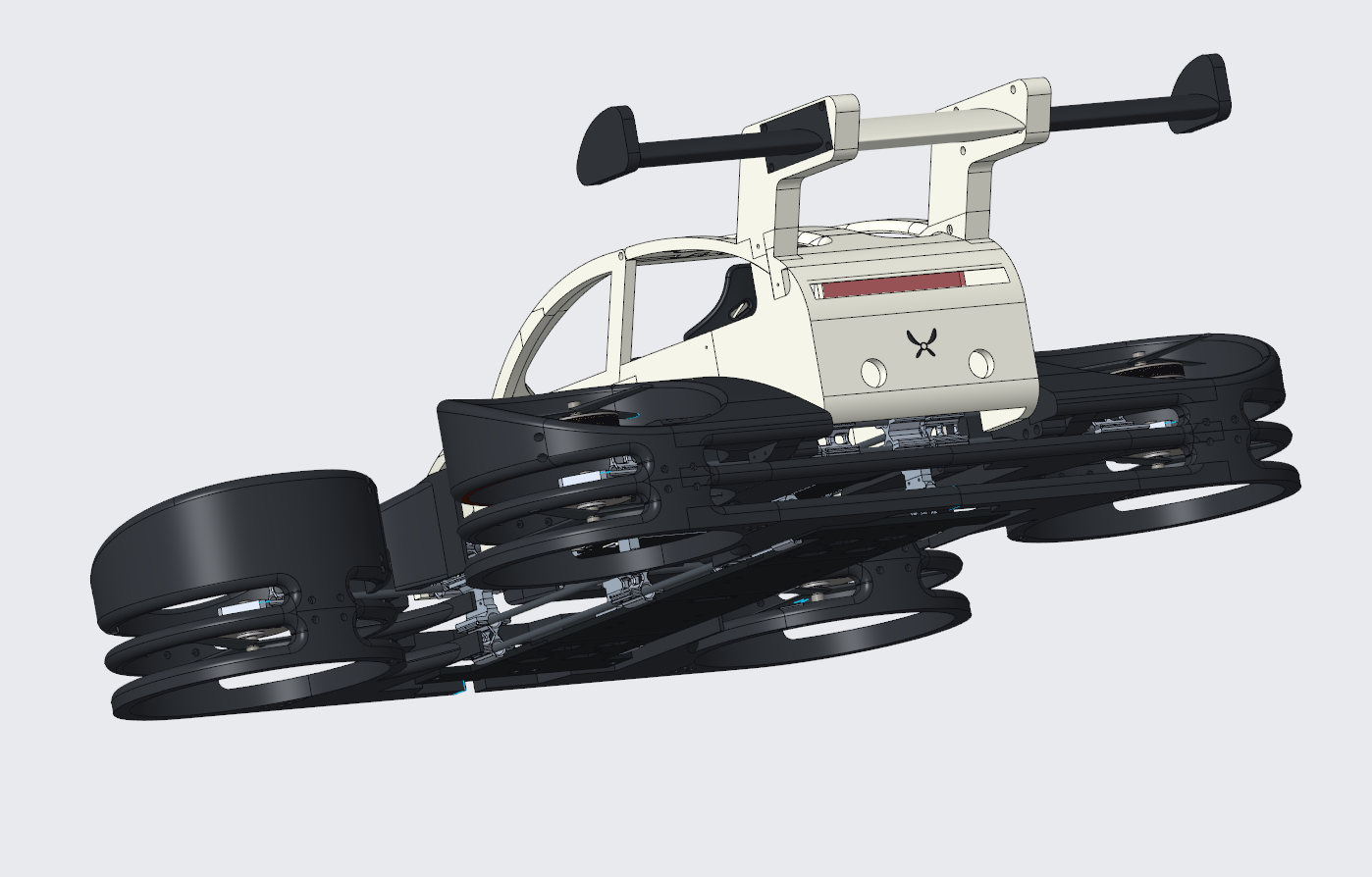
The first eVTOL vehicle designed from the ground up around an open airspace protocol. Ducted fan tri-foil architecture. Electric propulsion. LAPP-native flight stack.
Most eVTOL vehicles are designed first and then retrofitted to whatever airspace regulations eventually emerge. The Aeroboticarbon is designed the other way around. Every specification — climb rate, energy envelope, communication stack, vertical separation tolerance — is derived from the requirements of the Lorenz Airspace Protocol.
The result is a vehicle that is not just compatible with dense urban airspace operations, but native to them. The Aeroboticarbon is the reference implementation that proves the protocol works in physical flight — the way the original iPhone proved multi-touch was viable at scale.
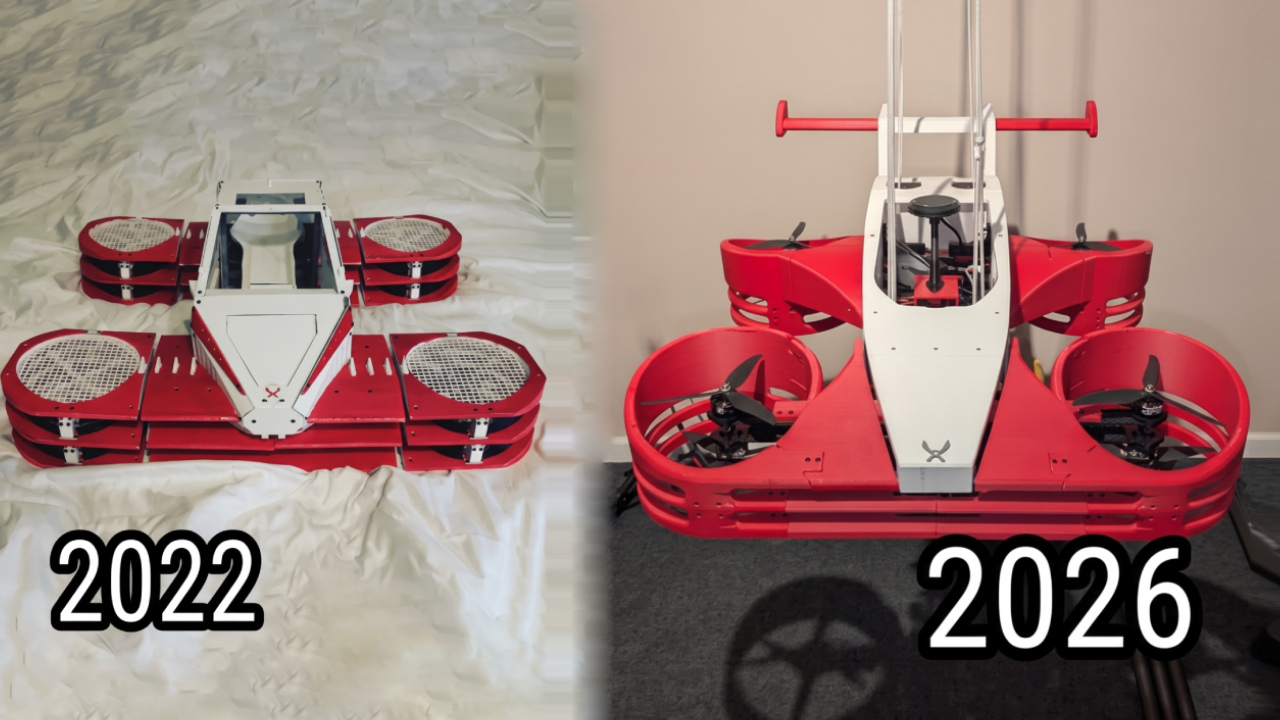
The aircraft uses a ducted fan tri-foil architecture with a lift-generating rear wing for efficient forward flight. Electric propulsion. Carbon-composite airframe. Currently at 1:5 scale; full-scale development in progress.
Founded in New Jersey with a single mission: to build a flying car that people actually want to use. Early concept work and market research began.
U.S. Design Patent D1078585-S awarded for the Aeroboticarbon form factor — the distinctive tri-foil ducted fan silhouette.
Patent · GrantedFirst physical prototype at one-fifth scale completed. Used for aerodynamic testing, control system validation, and design iteration.
Prototype · CompleteThe Lorenz Airspace Protocol — a market-based coordination framework for eVTOL traffic — published as a preprint and filed as a utility patent application. Reference simulator released publicly.
Patent · PendingFull-scale vehicle engineering underway. Airframe, propulsion integration, flight control stack. Strategic partnerships with aerospace research institutions being pursued.
In ProgressNo spam. No marketing noise. Just real updates when there's something real to share — prototype milestones, test flights, major partnerships.